Modafinil vs Vyvanse for ADHD: How Do They Compare?

Modafinil vs Vyvanse for ADHD
Modafinil and Vyvanse are prescription medications that can affect alertness and attention, but they have different roles in treating attention-deficit/hyperactivity disorder (ADHD). Vyvanse (lisdexamfetamine) is approved by the US Food and Drug Administration (FDA) for ADHD in adults and children aged six and older. Modafinil, a wakefulness-promoting medication, has been studied for ADHD but is not FDA-approved for the condition. Clinical evidence generally favours Vyvanse, particularly for adults. Randomized trials have demonstrated that Vyvanse reduces core ADHD symptoms, including inattention, hyperactivity, and impulsivity. Modafinil has produced mixed results: some studies involving children found benefits, while a large adult trial found no statistically significant improvement over placebo (Adler et al.,…

Can You Take Modafinil Every Day?

Modafinil Every Day
Yes. Modafinil can be prescribed for daily use. For adults with narcolepsy or obstructive sleep apnea (OSA), the U.S. prescribing information uses once-daily dosing, while treatment for shift work disorder is timed before the work shift. Daily treatment is an established medical use of modafinil: the American Academy of Sleep Medicine strongly recommends modafinil as a treatment for narcolepsy in adults. That does not mean taking modafinil every day is appropriate for everyone. The main controlled trials lasted weeks, and an important longer-term narcolepsy study followed patients for 40 weeks in an open-label extension rather than a long-term randomized comparison.…

Does Modafinil Build Up in Your System?

Modafinil Build Up
Yes. When modafinil is taken every day, some of the drug remains in the body when the next dose is taken, causing concentrations to increase during the first several doses. This accumulation does not normally continue indefinitely. With repeated once-daily dosing, modafinil typically reaches a stable pattern known as steady state within about 2 to 4 days.[1,2] Key Takeaways Modafinil accumulates during repeated daily dosing but normally reaches steady state rather than continuing to build up indefinitely. Blood concentrations generally settle into a stable repeated-dose pattern within the first several days.[1]…

Does Food Make Modafinil Take Longer to Work?

Food and Modafinil
Food can make modafinil reach its peak concentration in the blood later, but research has not established that eating delays its wake-promoting effects by the same amount. The FDA food-effect data measured how modafinil concentrations changed under fasting and non-fasting conditions rather than when participants first noticed greater alertness or another clinical effect. Key Takeaways Food can delay how quickly modafinil reaches its peak concentration in the blood. A later peak does not establish an equivalent delay in when modafinil’s wake-promoting effects begin. Modafinil can be taken with or without food.…

What Is the Half-Life of Modafinil?

Half-Life of Modafinil
Modafinil has an effective elimination half-life of about 15 hours after multiple doses, according to current prescribing information. Pharmacokinetic studies have produced somewhat different estimates depending on the study design and population, so this figure should be understood as an approximate population value rather than an exact elimination time for every person. Half-life does not mean that modafinil stops working or disappears from the body after 15 hours. It describes how long it takes for the drug concentration to decrease by approximately half during elimination. Key Takeaways Modafinil’s effective elimination half-life is about 15 hours after repeated dosing.…

How Long Does Modafinil Take to Work?

Modafinil and time it takes
Modafinil can begin producing measurable wake-promoting effects within about an hour of being taken, based on controlled human studies. That does not mean everyone will feel modafinil start working at exactly 60 minutes, because the studies assessed participants at set intervals rather than identifying an exact minute of onset.[1,2] Peak plasma concentrations generally occur 2–4 hours after an oral dose, later than the first measurable effects reported in controlled studies, so modafinil does not need to reach its highest blood concentration before it starts affecting wakefulness.[3,4]…

Can You Sleep After Taking Modafinil?

Sleep After Modafinil
Yes. Modafinil promotes wakefulness, but it does not make sleep impossible. Controlled studies show that timing matters: taking modafinil close to bedtime can shorten sleep, while morning or pre-shift dosing in clinical populations has often produced little measurable disruption of the subsequent scheduled sleep period.[1–4] How Long Does Modafinil Stay in Your System? According to current prescribing information, modafinil reaches peak blood concentrations approximately two to four hours after an oral dose and has an effective elimination half-life of about 15 hours after repeated dosing.[5] That does not mean everyone remains awake for 15 hours, or that sleep becomes possible at a predictable point based on half-life alone.…

Can Modafinil Cause Psychosis?

Modafinil and Psychosis
Psychotic symptoms, including hallucinations, delusions and paranoia, have been reported during modafinil treatment. Most of the direct evidence comes from case reports, which can show that symptoms appeared after modafinil exposure but cannot prove that the drug caused every episode. Controlled trials in people with schizophrenia provide a counterweight, showing no clear increase in worsening psychosis with modafinil compared with placebo, although the available evidence is limited and generally low quality (Ortiz-Orendain et al., 2019). Key Takeaways Psychotic reactions have been reported during modafinil treatment, but their frequency among people who use modafinil is not known.…

Can Modafinil Cause Hair Loss?

Modafinil and Hair Loss
Hair loss has been reported during modafinil treatment, but the published evidence is sparse. Current research does not establish that modafinil causes alopecia or show how frequently hair loss might occur in people taking it. Key Takeaways Alopecia was reported in one participant in a small study of 15 children taking modafinil, but a single uncontrolled observation cannot show that the drug was responsible. Hair loss did not emerge as a prominent adverse effect in a pooled safety analysis of six randomized modafinil trials. Drug-induced hair loss commonly takes the form of telogen effluvium, but the published modafinil case did not identify the type of alopecia.…

Is Modafinil Bad for Your Liver?

Modafinil and your Liver
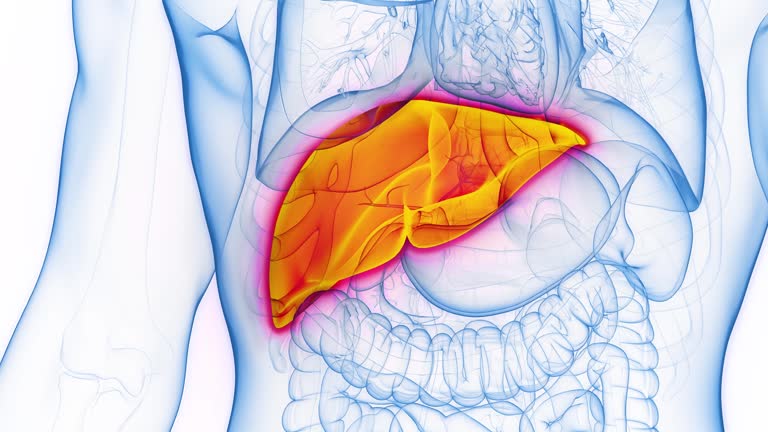
Modafinil is mainly processed by the liver, but that does not mean it commonly damages the liver. Clinical studies have found occasional increases in liver enzymes among people taking modafinil, but significant abnormalities have been uncommon. Modafinil has also not developed a convincing pattern of clinically apparent liver injury despite widespread use. The main liver-related concern is different: people with severe liver impairment clear modafinil more slowly, which can substantially increase the amount of the drug in the body. Key Takeaways Modafinil is extensively metabolised by the liver.…